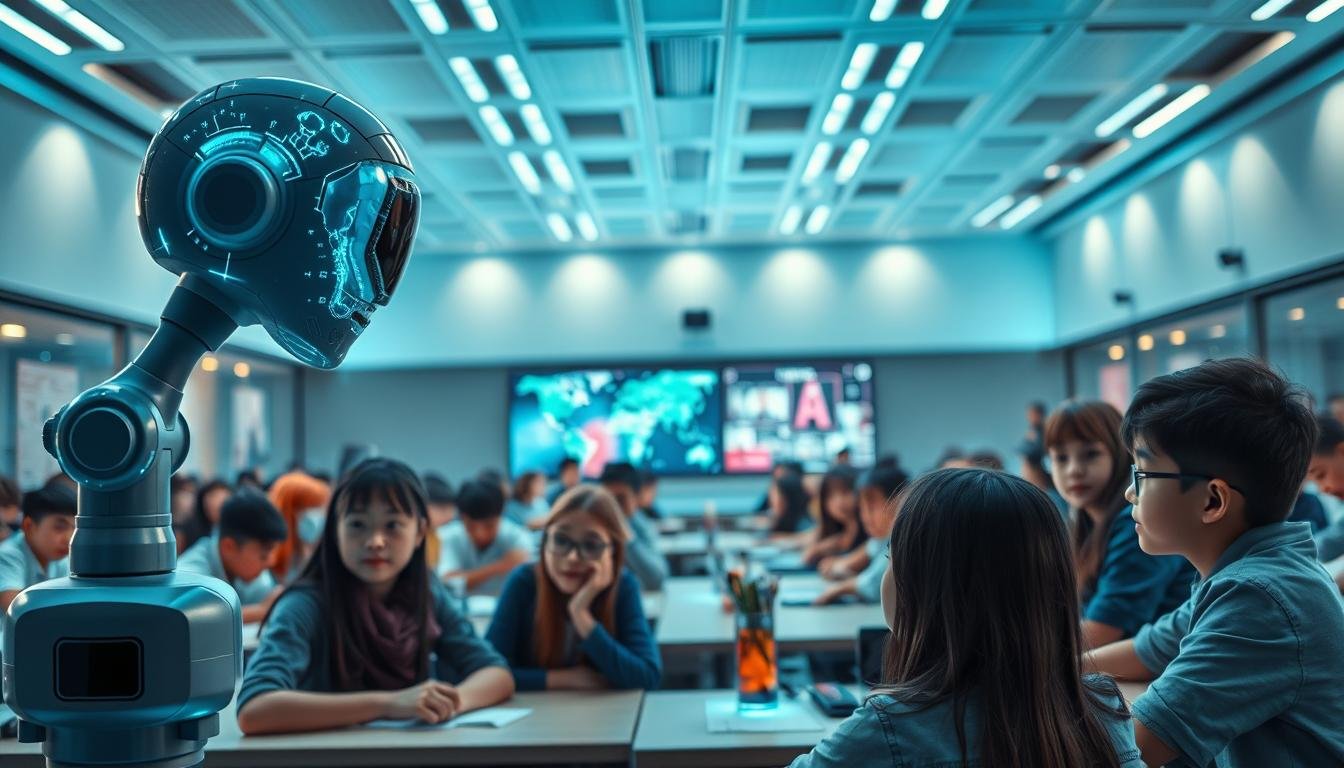
The use of artificial intelligence in education is changing how we learn and teach. Schools in the United States are starting to use AI to make learning more personal.
AI-powered learning systems adjust to what each student needs. They give feedback and check progress right away. This educational technology makes learning better and more fun.
Key Takeaways
- AI is being used to create personalized learning experiences.
- Adaptive learning systems adjust to individual students’ needs.
- Educational technology is enhancing the learning experience.
- AI-powered tools are assisting educators in various tasks.
- The integration of AI is revolutionizing the education sector.
The Current State of AI in Education
AI in education is growing fast with new ideas. Technology keeps getting better, making AI key in schools.
Key Statistics and Adoption Rates in American Schools
More American schools are using AI. A recent survey shows over 60% of schools use AI tools to improve learning.
| Statistic | Percentage |
|---|---|
| Schools using AI-powered tools | 62% |
| Teachers reporting improved student engagement | 75% |
| Administrators planning to increase EdTech investment | 80% |
Recent Developments and Innovations in Educational AI
New AI in education brings advanced learning tools. These tools use machine learning algorithms for tailored learning.
Notable AI Education Platforms
Some top AI education platforms are:
- Platforms that offer adaptive learning pathways
- Tools that enable real-time feedback and assessment
- Systems that facilitate intelligent tutoring
Investment Trends in EdTech
EdTech investment is growing, especially in AI. Reports show a 25% increase in EdTech investment in the last year.
Understanding AI Technologies in the Educational Context
AI is changing how we learn and teach. It makes learning more personal, effective, and fun. Schools can now offer better experiences thanks to advanced tech.
Machine Learning and Natural Language Processing Applications
Machine learning and NLP are big in education. Machine learning finds patterns in data and makes predictions. NLP lets computers understand and create human language.
These tools help make smart tutoring systems, automate grading, and give feedback instantly. For example, machine learning in education helps create learning platforms that fit each student’s needs.
Computer Vision and Speech Recognition in Classrooms
Computer vision and speech recognition are also used in schools. Computer vision understands visual info, while speech recognition recognizes spoken words. These help create interactive tools and make learning accessible for all.
Predictive Analytics and Adaptive Learning Systems
Predictive analytics and adaptive learning systems boost student success. Predictive analytics forecast student performance using data. Adaptive learning adjusts learning materials to fit each student’s level.
How AI Algorithms Personalize Content
AI algorithms are key in making learning personal. They use student data to suggest learning paths and adjust material difficulty. Experts say AI adaptive learning systems greatly improve student results by offering personalized learning.
“The future of education lies in the ability to provide personalized learning experiences that are tailored to the needs of individual students.”
AI in Education Transforming Classrooms: A Comprehensive Overview
AI is changing classrooms, making teaching more effective and personal. It’s affecting many parts of education.
Fundamental Changes in Teaching Methodologies
AI is changing how we teach, making it better for each student. AI-powered tools help teachers make lessons just for each student. They can check how students are doing and help them right away.
AI-enhanced instruction means teaching that really fits each student. This leads to better grades and happier teachers.
Reshaping Physical and Virtual Learning Environments
AI is also changing where we learn. Smart classrooms with AI are becoming common. They make learning fun and interactive.
Evolution of Educational Content Delivery Systems
From Traditional to AI-Enhanced Instruction
AI is also changing how we get educational content. It’s moving from old ways to new, exciting methods.
These new systems use machine learning algorithms to match content to each student. This makes learning more fun and effective.
With AI, teachers can make customized learning paths for each student. This ensures everyone gets the right content at the right time.
Personalized Learning Experiences Through AI
AI is changing how teachers teach by making learning personal for each student. This new approach uses advanced tech to understand how well students are doing. It then changes the lessons to fit each student’s needs.
Adaptive Learning Platforms and Their Impact
Adaptive learning platforms use AI to see what students are good at and what they need to work on. They adjust the lessons on the fly. This makes sure students are challenged but not too hard.
Key benefits of adaptive learning platforms include:
- Improved student engagement
- Enhanced understanding of complex concepts
- Better retention rates
Customized Learning Paths Based on Student Performance
AI looks at how well students are doing to make learning plans just for them. It finds out where they need help and suggests ways to improve.
For instance, if a student is having trouble with math, they get extra help or exercises made just for them.
Real-time Feedback and Assessment Mechanisms
AI tools give feedback right away, helping students see their mistakes and learn from them fast. This quick feedback is key to making learning stick and improve.
Case Example: Personalized Math Learning
AI is making a big difference in math classes. It offers detailed help, quizzes that adjust to the student, and feedback right away. This makes learning math much better.
With AI, teachers can make learning more inclusive and effective. As AI gets better, it will change learning even more.
AI-Powered Tools for Educators
Educators are using AI tools to improve teaching and student results. These tools help teachers work more efficiently. This lets them focus on their students.
Automated Grading and Assessment Systems
AI grading systems are making teachers’ work easier. They accurately check student work, saving time and reducing mistakes. This ensures grades are fair and consistent.
AI-Assisted Content Creation and Curation
AI tools help teachers make better educational content. They suggest resources, create quizzes, and plan lessons. This is all based on what students need.
Administrative Task Automation and Time-Saving Solutions
AI is taking over boring tasks like tracking attendance and sending emails. This gives teachers more time for teaching and talking to students.
Teacher Experiences with AI Assistants
Teachers love AI assistants for many reasons. They say it reduces their work and makes students more engaged. AI virtual assistants help with classroom tasks, give feedback, and support students with special needs.
Enhancing Student Engagement and Outcomes
AI technologies are changing how we learn. They help make learning more fun and effective. This is done through new and exciting ways.
Gamification and Interactive Learning Environments
Gamification uses game elements in school to get students more involved. AI-powered gamification makes challenges that fit each student’s level. This makes learning more fun and effective.
- Interactive simulations
- Virtual labs
- Gamified assessments
Addressing Different Learning Styles with Adaptive Content
AI creates adaptive learning paths for each student. It considers their needs, abilities, and how they learn best. This way, every student gets content that’s just right for them.
Supporting Students with Special Needs Through AI
AI helps students with special needs a lot. For example, speech recognition and natural language processing make it easier for them to use educational content.
Measuring Engagement Improvements
To see if these methods work, teachers look at different things. They check:
- Student participation rates
- Assignment completion rates
- Assessment scores
By looking at these, teachers can make their teaching even better. This helps students stay more engaged and do better in school.
Challenges and Concerns in AI Implementation
AI in education has many benefits, but it also faces challenges. Educators and policymakers must tackle these issues to make AI work well in schools. Several concerns have come up that need to be solved for AI to succeed in education.
Data Privacy and Security Issues in Educational Settings
Data privacy and security are big worries with AI in schools. AI needs lots of student data to work well. But, how this data is gathered, kept, and kept safe is a big worry. Keeping student info safe is key to trusting AI tools in schools.
Digital Divide and Accessibility Challenges
The digital divide is another big issue with AI in schools. Not all students can use AI tools because they don’t have the right tech. This makes learning unfair for some. We need to fix this to make AI education fair for everyone.
Teacher Training and Adaptation to New Technologies
Teachers also face a big challenge with AI. They need to learn how to use new AI tools in class. Teachers must get the right training to use AI well. This means they need ongoing support to feel sure and skilled with these new tools.
Overcoming Implementation Barriers
To get past AI’s challenges, we need teamwork. Educators and policymakers must find ways to solve these problems. This includes better data protection, helping students who don’t have tech, and training teachers. By tackling these issues, we can make AI a great tool for learning for everyone.
Case Studies: Successful AI Integration in Schools
AI is changing education in the United States. It’s making a big difference in K-12 and higher education. Even corporate training is getting a boost.
K-12 Education Transformations Across America
In K-12, AI helps make learning plans just for each student. For example, Elementary schools in California use AI to adjust reading programs for each student’s level.
Higher Education Applications and University Innovations
Universities use AI for predictive analytics and adaptive learning systems. For instance, MIT has an AI platform for physics problem-solving.
Corporate Training and Lifelong Learning Advancements
AI is also improving corporate training. Companies like IBM create tailored training for employees. This boosts their skills and work performance.
Measurable Outcomes and Success Metrics
Success in AI integration is tracked in several ways. These include better student engagement, higher grades, and more efficient teachers. For example, schools with AI adaptive learning systems see a 25% increase in student performance.
The Future of AI in Education
AI is changing how we learn, making education more personal and efficient. As AI grows, we’ll see big changes in schools.
Emerging Technologies and Trends for the Next Decade
New tech like advanced machine learning and virtual reality will change education. AI-powered adaptive learning systems will give students learning plans just for them.
Predicted Classroom Changes by 2030
By 2030, classrooms will be very different. AI will make learning more interactive and fun. Virtual and augmented reality will help students learn better.
| Technology | Current State | Predicted State by 2030 |
|---|---|---|
| AI-powered Adaptive Learning | Limited adoption | Widespread integration |
| Virtual Reality in Classrooms | Experimental | Mainstream |
| Natural Language Processing | Basic applications | Advanced, nuanced understanding |
Research Directions and Upcoming Innovations
AI research in education is getting better and more accessible. Expert predictions say AI will make education fairer and better.
Expert Predictions and Industry Forecasts
Experts think AI will make education more personal and open. As AI gets smarter, we’ll see new ways to learn in schools.
Ethical Considerations and Best Practices
AI is becoming more common in schools, which raises important ethical questions. We need to think carefully about how to use AI in education. This includes looking at the many ethical issues that come up.
Ensuring Equitable Access to AI-Enhanced Education
One big issue is making sure all students can use AI in school. We must close the digital gap. This means helping schools in poor areas keep up with AI technology.
- Implementing policies that promote equal access to technology
- Investing in infrastructure to support AI-driven education
- Training educators to effectively use AI tools
Maintaining Human Connection in Technology-Rich Learning
AI can make learning better, but we must not forget the importance of human connection. This balance helps students get the emotional and social support they need.
- Encouraging collaborative projects that utilize AI tools
- Fostering a sense of community through interactive learning environments
- Ensuring teachers are involved in the AI implementation process
Developing Responsible AI Guidelines for Educational Settings
Creating responsible AI guidelines is key for using AI ethically in schools. We need policies that protect student data and make sure AI is fair and transparent.
Balancing Innovation with Student Wellbeing
We must find a balance between using AI and protecting students’ wellbeing. This means watching how AI affects students’ mental and emotional health closely.
Conclusion
AI is changing how we learn and teach, making classrooms more interactive. It helps teachers create lessons that fit each student’s needs. This makes learning more personal and effective.
AI tools are making learning more engaging and improving results. But, we must tackle issues like data privacy and access to technology. This ensures everyone benefits from AI in education.
In the end, AI is set to deeply change our classrooms. It will help students thrive in today’s complex world. By using AI wisely and solving its problems, we can make education better for all.
FAQ
What is the current state of AI adoption in American schools?
Many schools in the United States are now using AI tools to improve learning. More schools are looking into how AI can help.
How is AI being used to create personalized learning experiences?
AI helps make learning plans that fit each student’s needs. It also gives feedback right away to help students learn better.
What are some examples of AI-powered tools for educators?
Teachers use AI for grading, making learning materials, and automating tasks. This helps them focus on teaching more.
How is AI addressing different learning styles and supporting students with special needs?
AI adapts to how students learn and helps those with special needs. It makes learning experiences that fit each student’s needs.
What are some of the challenges associated with AI implementation in education?
Schools face issues like keeping data safe, making sure everyone has access, and training teachers. They also need to get used to new tech.
How is AI expected to change the classroom by 2030?
By 2030, classrooms will likely be more focused on each student’s needs. This will make learning more effective and personal.
What are some best practices for ensuring equitable access to AI-enhanced education?
Schools need to plan carefully to make sure everyone has a chance to use AI tools. They should work to close the digital gap and give equal chances to all.
How can educators balance innovation with student wellbeing when implementing AI?
Teachers should make sure AI tools are used responsibly. They should always think about what’s best for students when using AI.
What are some notable AI education platforms being used in schools today?
Some AI platforms offer learning plans that change based on how students do. They also help with making learning materials and grading.
How is AI being used in corporate training and lifelong learning?
AI is making corporate training and lifelong learning better. It provides learning plans that fit each person, adapts to their needs, and gives feedback right away.