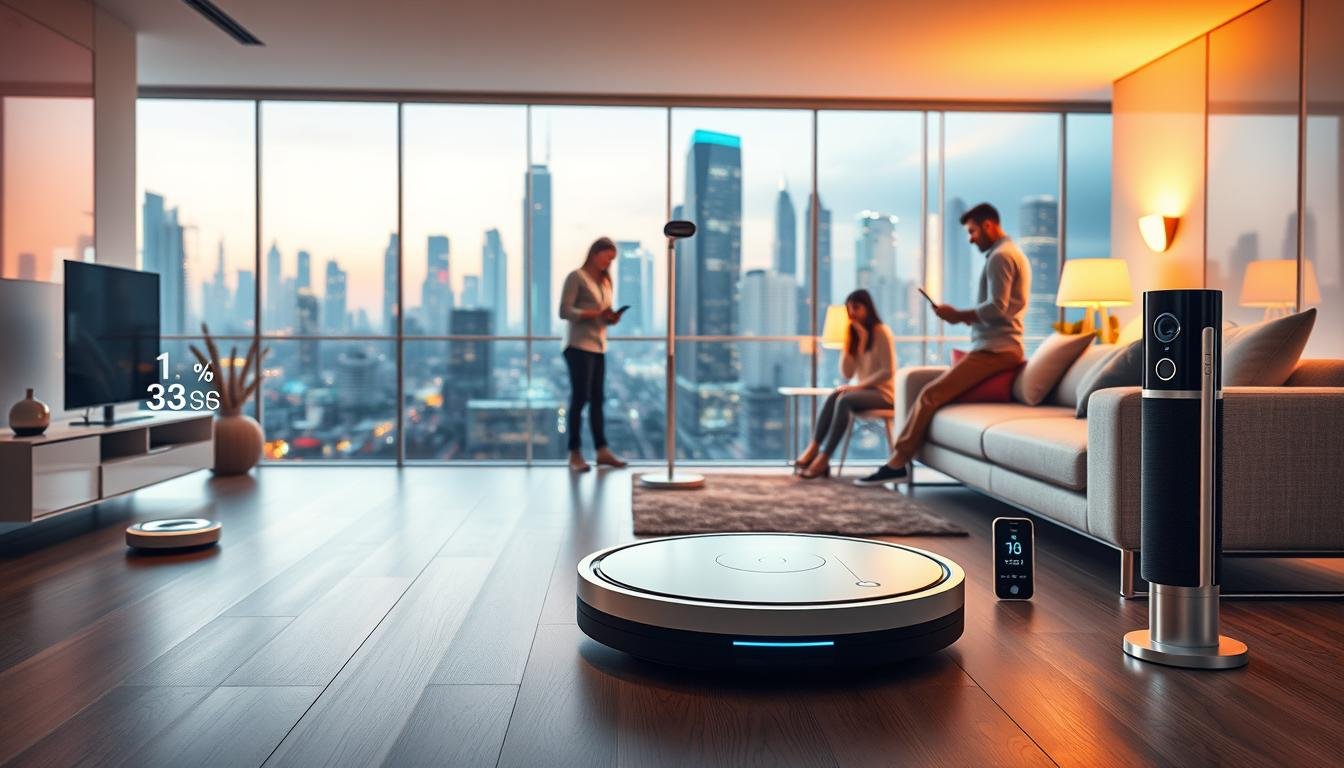
Technology is changing how we live, making our homes better. Home automation is making our homes more convenient, efficient, and safe. Our homes are getting smarter with IoT technology.
are becoming more common. Now, we can control and monitor our homes from anywhere.
This article will look at the current state of smart home technology. We’ll also talk about its future, including key players, trends, and benefits.
Key Takeaways
- Smart home devices are making homes more convenient and efficient.
- IoT technology is driving the growth of home automation.
- The smart home industry is rapidly evolving with new trends and players.
- Smart home devices offer enhanced security and control.
- The future of smart home technology holds much promise.
The Evolution of Home Automation
Home automation has moved from a dream to a real part of our lives. This change came from new technology, changing how we live and interact with our homes.
From Science Fiction to Reality
Home automation was once seen as science fiction. But with smart home technology, it’s now a big part of our lives. New devices and systems let us control and watch our homes from anywhere, making life easier and more efficient.
Key Milestones in Smart Home Technology
The journey of home automation has seen major milestones. Early automation systems started it, but the IoT revolution really moved things forward.
Early Automation Systems
The first home automation systems were simple, using remote controls and basic automation. These early systems helped pave the way for more advanced technologies.
The Internet of Things Revolution
The IoT revolution changed home automation a lot. It connected devices to the internet, making them talk to each other easily. This created a smarter, more connected home.
This change has kept shaping the industry. New smart home tech keeps coming, making home automation easier and more friendly. It’s changing how we live.
Understanding Smart Home Ecosystems
Smart home ecosystems bring together different technologies for a better living space. They let devices talk to each other smoothly, making our homes smarter.
Major Platforms and Their Differences
Amazon Alexa, Google Home, and Apple HomeKit are big names in smart homes. Each has special features and works with many devices.
Amazon Alexa Ecosystem
Amazon Alexa works with lots of devices, making it a favorite. It lets you customize your smart home in many ways.
Google Home Environment
Google Home works well with Google services, offering a simple experience. It’s great at understanding complex commands, making it powerful for smart homes.
Apple HomeKit Integration
Apple HomeKit is secure and easy to use, especially for Apple fans. It focuses on keeping your data safe, which many people value.
Communication Protocols and Standards
For devices to work together, they need to talk the same language. Wi-Fi, Bluetooth, and Zigbee are key for this.
Wi-Fi, Bluetooth, and Zigbee
- Wi-Fi: Fast data transfer, perfect for high-bandwidth needs.
- Bluetooth: Good for low-power, low-data tasks, like smart locks and sensors.
- Zigbee: Low-power, low-data for home automation, with reliable mesh networking.
Matter Standard and Future Compatibility
The Matter standard aims to make devices from different makers work together better. It’s set to make smart homes easier to use by ensuring they all play nice.
As smart homes grow, knowing about the big platforms and how they talk to each other is key. It helps us choose the right tech for our homes.
The Rise of Smart Home Devices: Market Growth and Adoption
The smart home market is growing fast, thanks to IoT and connected devices. People want to live smarter, and technology is making that possible. Smart home devices are leading the way in this change.
Current Market Statistics and Projections
The smart home market has grown a lot in recent years. In 2020, it was worth $80.21 billion. It’s expected to grow even more, at a rate of 11.4% from 2021 to 2028. This growth is thanks to more people using smart speakers, thermostats, and security cameras.
Demographics of Smart Home Users
Smart home users are from all walks of life. But some groups are more likely to use these devices. Tech-savvy people, homeowners, and families with young kids are more likely to adopt smart home technology. People with higher incomes and education levels also tend to use these devices more.
Factors Driving Consumer Adoption
Several factors are making people want smart home devices. Convenience and saving money are two big reasons.
Convenience and Time-Saving Benefits
Smart home devices make life easier and save time. For example, smart speakers let you control your home with just your voice. This makes managing daily tasks simpler.
Cost Reduction and Efficiency
Smart home devices also help save money and energy. Smart thermostats learn your temperature preferences and adjust the temperature for you. This can lower your energy use and your utility bills.
The smart home market is growing, and it’s clear why. People want the convenience, cost savings, and new technology that smart home devices offer.
Essential Smart Speakers and Control Hubs
Voice assistants and smart speakers are changing home automation. They make it easy to control smart devices. At the center of this change are voice assistants like Amazon Alexa, Google Assistant, and Siri. They are key to smart home systems.
Voice Assistants as Home Control Centers
Voice assistants are the main control point for many smart home devices. They let users control their homes with voice commands. This makes it easy to change lighting, temperature, and security settings.
Amazon Echo Product Line
The Amazon Echo line, including the Echo Dot and Echo Show, offers many choices. These devices have Alexa, making it easy to control compatible smart devices.
Google Nest Speakers
Google Nest speakers, powered by Google Assistant, are another great option. They have high-quality audio and easy voice control.
Apple HomePod Options
Apple HomePod devices, with Siri, are for Apple users. They offer a secure and easy way to control smart devices with voice commands.
Smart Displays and Control Panels
Smart displays and control panels add a visual layer for managing smart devices. They make it easier to adjust settings and keep an eye on home activity.
Smartphone Apps as Control Centers
Smartphone apps are another key control center for smart homes. They let users manage devices from anywhere, offering flexibility and convenience.
By combining smart speakers, displays, and apps, users can build a complete smart home system. It’s both easy to use and powerful.
Smart Lighting and Electrical Solutions
Smart lighting and electrical innovations are leading the way in making homes smarter. They improve the look and feel of homes and save energy. Plus, they make life easier and more convenient.
Smart Bulbs and Light Strips
Smart bulbs and light strips let you change the lighting with just a tap on your phone or a voice command. You can pick from many colors and brightness levels. This means you can set the mood for any moment, whether it’s for relaxing or getting work done.
Smart Switches and Dimmers
If you like the old-fashioned way, smart switches and dimmers are a great choice. They can swap out your old light switches for new ones that you can control. Brands like Lutron and Leviton make smart switches that work well with other smart home systems.
Outdoor Lighting Automation
Outdoor lighting automation boosts your home’s security and looks. It lets you control your outdoor lights from anywhere. This is great for keeping intruders away and welcoming guests. You can set your lights to turn on and off at certain times or when someone moves nearby.
Smart Plugs and Energy Monitoring
Smart plugs turn any device into a smart one, letting you control and schedule it. Pair them with energy monitoring systems, and you can see how much energy you use in real-time. This helps you find ways to use less energy, saving money and helping the planet.
By using these smart lighting and electrical solutions, you can make your home more efficient and fun. As smart home tech keeps getting better, we’ll see even more cool things coming our way.
Home Security and Safety Innovations
New technologies have changed the smart home world. Homeowners can now feel safer and more at ease thanks to these advancements.
Video Doorbells and Surveillance Systems
Video doorbells and surveillance systems lead in home security. Brands like Ring, Nest, and Arlo bring top-notch solutions. These allow homeowners to watch their homes from anywhere.
Ring, Nest, and Arlo Solutions
These brands set the bar high with their tech. Ring’s doorbell lets users see, hear, and talk to visitors from anywhere. This is just one example of their innovation.
- Ring: Known for its video doorbells and seamless integration with other smart devices.
- Nest: Offers a range of security cameras with advanced features like facial recognition.
- Arlo: Provides wire-free security cameras with high-definition video and night vision.
Smart Locks and Access Control
Smart locks have changed how we lock our homes. They offer keyless entry, biometric authentication, and remote monitoring. This means better security and ease.
| Feature | Traditional Locks | Smart Locks |
|---|---|---|
| Keyless Entry | No | Yes |
| Biometric Authentication | No | Yes |
| Remote Monitoring | No | Yes |
Connected Smoke and Carbon Monoxide Detectors
Connected smoke and carbon monoxide detectors add safety. They send alerts to phones, helping homeowners act fast.
Key Benefits: Early warning of dangers, alerts on phones, and work with smart home devices.
Water Leak and Environmental Sensors
Water leak and environmental sensors spot dangers like leaks and extreme temperatures. They help homeowners act quickly to avoid damage.
For example, water leak sensors can find moisture, warning of leaks under sinks or near appliances.
Kitchen and Home Appliance Integration
The modern kitchen is getting smarter, thanks to new technology in home appliances. This change isn’t just about cooking. It’s also about making household chores easier and more convenient.
Smart Refrigerators and Cooking Appliances
Smart refrigerators now have features like internal cameras. You can see what’s inside your fridge from anywhere. Some even suggest recipes based on what you have.
Cooking appliances, like smart ovens, can be controlled with your phone. This ensures your meals are cooked just right.
- Advanced Features: Many smart appliances offer advanced features like meal planning and remote monitoring.
- Energy Efficiency: Smart appliances are designed to be energy-efficient, reducing your utility bills.
Connected Laundry and Cleaning Devices
Laundry and cleaning have become more automated with connected devices. These smart appliances make chores easier and more efficient.
Robot Vacuums and Mops
Robot vacuums and mops have changed floor cleaning. Brands like iRobot and Samsung offer models you can program and control with apps. This makes cleaning your home easy without manual effort.
Smart Washing Machines and Dryers
Smart washing machines and dryers can be monitored and controlled from anywhere. They have features like customized wash cycles and notifications when a cycle is done.
Small Appliance Automation
Small appliances are also getting smarter. Devices like smart coffee makers and slow cookers can be controlled with apps. This adds convenience to your daily routine.
In conclusion, kitchen and home appliance integration is making big strides in home automation. With these smart devices, households can enjoy a more convenient, efficient, and enjoyable living experience.
Energy Management and Sustainability
The world is moving towards a greener future, and smart homes play a big role. They help us use energy wisely, saving money and protecting the planet.
Smart Thermostats and HVAC Control
Smart thermostats lead the way in saving energy. They learn your habits to adjust your home’s temperature, cutting energy costs by up to 20%. Smart HVAC control keeps your home cozy while saving energy.
Energy Monitoring Systems
Energy monitoring systems show how much energy you use in real time. They help spot where you can save. Tools like Sense or Neurio give you tips to use less energy.
Solar Integration and Battery Storage
Adding solar panels to your smart home is smart. They make energy and store it for later. Solutions like Tesla Powerwall use daytime energy at night, cutting your bills.
Water Conservation Technologies
Smart homes also save water. Devices like smart water sensors and leak detectors warn you of leaks. They help you save water and money.
Using these smart solutions, homeowners can make a big difference. They save the planet and enjoy the benefits of smart homes.
“The future of energy is not just about generation; it’s about efficiency and smart management.” –
Privacy, Security, and Ethical Considerations
Smart home tech is getting better, but it also raises privacy, security, and ethics questions. Our homes now have many connected devices. We need to think about these issues carefully.
Data Collection and Privacy Concerns
Smart home gadgets collect personal data and usage patterns. This is a big data privacy worry. The data could be used or stolen.
Best Practices for Securing Your Smart Home
To keep your smart home safe, use strong passwords and update software often. Check device permissions and be careful with third-party apps. These steps help protect your home.
Ethical Implications of Home Automation
Home automation raises many ethical questions. These include the digital divide and environmental impact.
Digital Divide and Accessibility
Smart home tech can make inequality worse if it’s not accessible to all. It’s important to make these technologies inclusive and easy for everyone to use.
Environmental Impact of Device Proliferation
More smart devices mean more electronic waste and energy use. Manufacturers and users must think about the environmental impact of these devices.
| Best Practice | Description | Benefit |
|---|---|---|
| Use Strong Passwords | Utilize complex and unique passwords for all devices and accounts. | Reduces the risk of unauthorized access. |
| Regular Software Updates | Keep all smart devices and their software up-to-date. | Ensures you have the latest security patches. |
| Limit Device Permissions | Be cautious with the permissions granted to smart devices and apps. | Minimizes the potential for data misuse. |
As we use more smart home tech, we must tackle these privacy, security, and ethics issues. This way, we can enjoy the benefits of smart homes while avoiding their risks.
Conclusion
The rise of smart home devices is changing how we live. It makes our homes more convenient, efficient, and secure. Smart home technology has improved many parts of our daily lives.
It lets us control lighting, temperature, and even home security. The future of home automation looks bright. New technologies will bring even more innovative solutions.
As the industry grows, we’ll see better energy management and home security. Appliances will also integrate better, making our homes smarter. This will make our lives easier and more automated.
As smart home devices become more common, it’s key to stay updated. Knowing the latest smart home news and security tips is crucial. This way, you can enjoy a more streamlined and secure living space.
FAQ
What is the difference between Amazon Alexa, Google Home, and Apple HomeKit?
Amazon Alexa, Google Home, and Apple HomeKit are big names in smart homes. They work differently with devices and have unique features. Amazon Alexa works with many devices. Google Home is great with Google services. Apple HomeKit is best for Apple users, offering a secure experience.
How do I ensure the security of my smart home devices?
Keep your smart home safe by using strong passwords and updating software. Be careful with what you allow your devices to do. Use a good security system like Ring or Nest. Also, keep your smart devices separate from your main network.
What is Matter, and how will it impact the smart home industry?
Matter is a new standard for smart homes. It makes devices from different makers work better together. This makes setting up and using smart devices easier for everyone.
Can I control my smart home devices when I’m away from home?
Yes, you can control your smart home from anywhere. Just use a smartphone app. This lets you change settings on devices like thermostats and lights, even when you’re not home.
How do smart thermostats work, and can they really save me money?
Smart thermostats, like Nest or Ecobee, learn your temperature habits. They adjust the heat or cool air for you. You can also control them from your phone. This helps save energy and money.
What are the benefits of smart lighting, and how do I get started?
Smart lighting saves energy and makes your home look better. Start by using smart bulbs like Philips Hue or LIFX. Or, try smart switches and dimmers.
Can smart home devices help me conserve water and energy?
Yes, devices like smart water sensors and energy monitors help. They find leaks and show how much energy you use. This lets you save water and energy.
How do I choose the right smart speaker for my needs?
Pick a smart speaker based on what you need. Look at compatibility, voice assistant features, and sound quality. Amazon Echo, Google Nest, and Apple HomePod are popular choices.