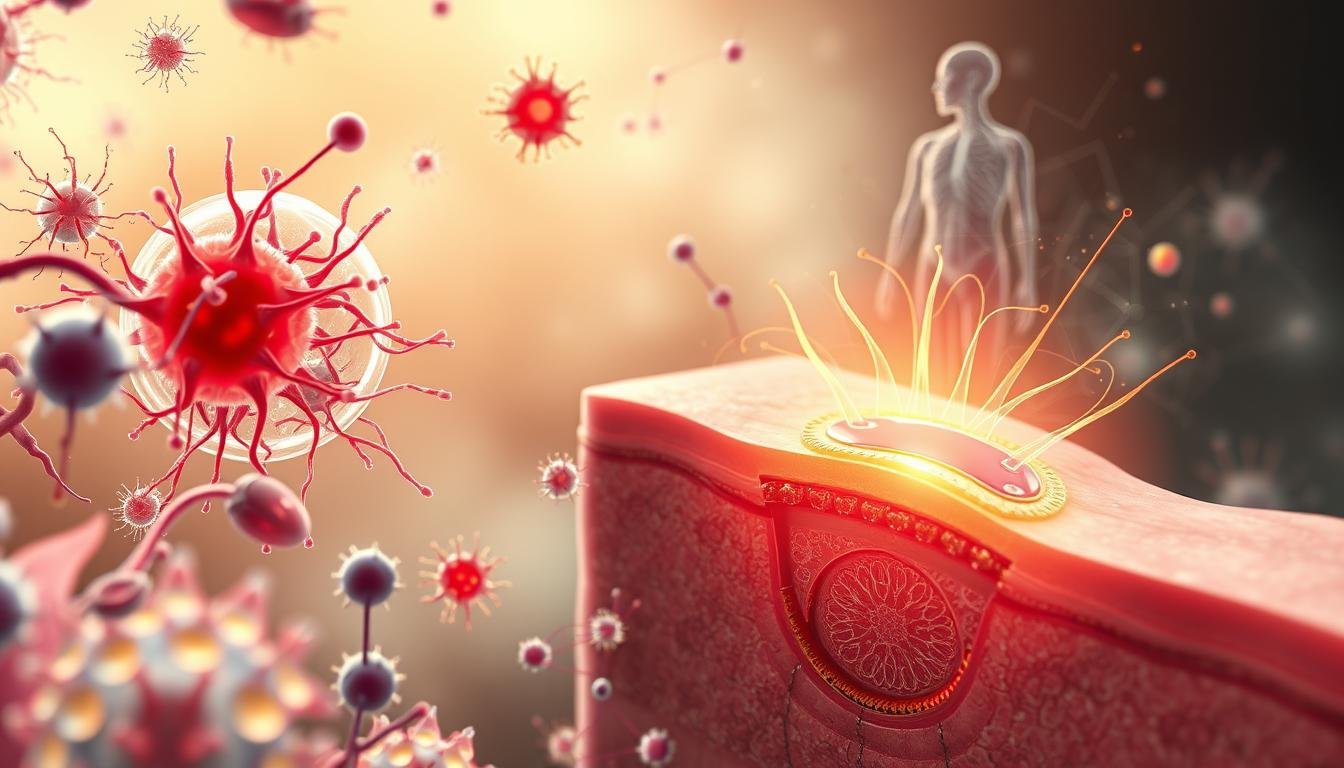
The human body can heal itself in amazing ways. It can fix and restore itself when given the right chance. This process is both fascinating and complex.
This ability to heal is key to our health and wellbeing. It involves many body processes working together. These processes help fix damaged tissues, fight infections, and keep our body balanced.
Key Takeaways
- The body has an innate ability to heal itself.
- Natural healing processes involve various physiological mechanisms.
- Self-healing is crucial for overall health and wellbeing.
- Understanding natural healing can help promote overall health.
- The body’s repair processes can be supported through lifestyle choices.
The Science of Self-Healing
To understand how our bodies heal, we need to look into cellular regeneration and homeostasis. Our bodies have complex ways to fix and grow back tissues. This is key to staying healthy and getting better after injuries.
Cellular Regeneration Basics
Cellular regeneration means replacing or fixing cells. It’s vital for keeping tissues working right. Different parts of our body can heal at different rates. For instance, the liver can grow back quickly, but the heart’s healing power is weaker.
| Tissue Type | Regenerative Capacity | Examples |
|---|---|---|
| Liver | High | Can regrow lost segments |
| Skin | High | Heals wounds through scar formation and tissue regeneration |
| Heart Muscle | Limited | Has limited ability to regenerate after injury |
The Body’s Innate Intelligence
The body’s innate intelligence is its natural ability to stay healthy and fix itself without thinking about it. This natural skill is essential for healing.
Homeostasis and Healing
Homeostasis is keeping the body’s internal balance steady, even when things outside change. It’s key for healing because it helps cells grow and repair. If homeostasis is off, healing can be harder.
The Remarkable Immune System
Our immune system is amazing, always working to keep us healthy. It’s a complex network of cells, tissues, and organs. They work together to defend us against harmful invaders like bacteria and viruses.
First Line of Defense: Physical Barriers
The body’s first defense is its physical barriers. These barriers stop pathogens from getting in.
Skin as a Protective Shield
The skin is our biggest organ and first defense. It keeps many pathogens out. The skin’s outer layer sheds dead cells, taking pathogens with them.
Mucous Membranes and Chemical Defenses
Mucous membranes in our body also play a key role. They trap pathogens with mucus. Chemicals like lysozyme in tears and saliva help break down bacteria.
White Blood Cells and Their Functions
When pathogens get past the skin, white blood cells take over. They are crucial in fighting off invaders. Neutrophils and macrophages eat and digest foreign particles. Lymphocytes are key in the adaptive immune response.
The Adaptive Immune Response
The adaptive immune response is specific to each pathogen. It involves lymphocytes and can remember pathogens for a quicker response next time.
Antibodies and Memory Cells
Lymphocytes make antibodies that mark pathogens for destruction. Some lymphocytes become memory cells. They remember pathogens and can respond quickly if they return.
| Component | Function |
|---|---|
| Skin | Physical barrier against pathogens |
| Mucous Membranes | Trap pathogens with mucus |
| White Blood Cells | Engulf and digest foreign particles and microbes |
| Antibodies | Recognize and bind to specific pathogens |
The immune system is complex, with many parts working together. Understanding it helps us see how to support it through lifestyle and medicine.
“The immune system is a complex and highly regulated system that protects the body against infection and disease. Understanding its mechanisms can help us appreciate the intricate balance between health and disease.”
Inflammation: The Misunderstood Healer
Inflammation is a complex biological response that has been misunderstood. It is a natural defense mechanism that protects the body from harm. Yet, its importance in healing is often overlooked.
Acute vs. Chronic Inflammation
There are two main types of inflammation: acute and chronic. Acute inflammation is a short-term response to injury or infection. It is marked by redness, swelling, and pain. It is a necessary response that helps the body heal.
Chronic inflammation, however, is a prolonged and persistent inflammation. It can lead to various diseases.
The Healing Purpose of Inflammation
Inflammation plays a crucial role in the healing process. It brings immune cells to the affected area. This promotes the removal of pathogens and debris.
Increased blood flow and immune cell recruitment are key aspects of this process.
Increased Blood Flow and Immune Cell Recruitment
During inflammation, blood flow to the affected area increases. This brings immune cells that fight off infections. This process is essential for the removal of pathogens and the initiation of healing.
When Inflammation Goes Wrong
While inflammation is a necessary response, it can become problematic if it persists or becomes chronic. Chronic inflammation can lead to tissue damage and various diseases. Examples include arthritis and cardiovascular disease.
- Inflammation is a natural response to injury or infection.
- Acute inflammation is a necessary response for healing.
- Chronic inflammation can lead to various diseases.
How the Body Heals Itself Naturally After Injury
The human body can heal itself after an injury. It uses a multi-step process to fix damaged tissues. This process is complex but very efficient, involving many physiological responses to repair and grow back damaged areas.
The Clotting Cascade
The first step after injury is the clotting cascade. This is a quick series of events that forms a blood clot. The clot stops too much blood loss and keeps the wound safe from germs. It involves many clotting factors working together to turn fibrinogen into fibrin, which makes the clot.
Wound Healing Phases
Wound healing goes through several phases: the inflammatory, proliferative, and maturation phases.
Inflammatory Phase
The inflammatory phase is the body’s quick response to injury. It shows as redness, swelling, and warmth around the wound. White blood cells are sent to clean the wound and fight off infection.
Proliferative Phase
The proliferative phase comes next. The body starts to rebuild tissue. It makes granulation tissue and starts to close the wound through epithelialization.
Maturation Phase
The final maturation phase is about making the new tissue stronger. Collagen remodeling happens, making the healed wound stronger.
Tissue Regeneration
Tissue regeneration is key in healing. The body not only fixes but also regenerates damaged tissues. This involves many cell types, including stem cells, which are important for restoring tissue function.
The body’s healing abilities show its amazing power to repair itself. Knowing how it heals can help us support and improve the healing process.
Bone and Muscle Repair Mechanisms
The body has amazing healing powers. When we get hurt, it starts a detailed process to fix the damage. This process helps restore tissues to their original state.
How Broken Bones Mend
Bone healing goes through several stages. These include inflammation, soft callus, hard callus, and remodeling. Osteoblasts and osteoclasts are key players in this journey.
The Role of Osteoblasts and Osteoclasts
Osteoblasts help build bone by creating the matrix. Osteoclasts, on the other hand, break down bone tissue. This balance is crucial for bone repair.
| Cell Type | Function | Role in Bone Repair |
|---|---|---|
| Osteoblasts | Bone Formation | Produce bone matrix |
| Osteoclasts | Bone Resorption | Resorb bone tissue |
Muscle Recovery After Damage
When muscles get hurt, satellite cells kick in. These stem cells help grow new muscle fibers. This is key for getting muscle function and strength back.
The Role of Stem Cells in Tissue Repair
Stem cells can turn into many different cell types. They are vital for fixing damaged tissues by becoming the specific cells needed.
Digestive System Restoration
The body’s digestive system can heal itself. This amazing process includes renewing the gut lining, the role of the microbiome, and the liver’s ability to regenerate.
Gut Lining Renewal
The gut lining is always being replaced. This is key to keeping the gut strong and stopping toxins from getting into the blood.
The Microbiome’s Role in Healing
The microbiome is vital for digestion. It helps break down food, makes vitamins, and fights off bad bacteria. A healthy microbiome is needed for the digestive system to heal.
Liver Regeneration Capabilities
The liver can grow back on its own. This happens through new liver cells and tissue forming.
The Liver’s Unique Ability to Regrow
The liver’s power to heal is key after damage from toxins, infections, or surgery. It shows how important the liver is for our health and its ability to fix itself.
The Nervous System’s Self-Repair Abilities
The nervous system can fix itself through many steps. This is key for healing from brain injuries and diseases.
Neuroplasticity Explained
Neuroplasticity means the brain can change by making new connections. This is how it heals and learns new things. Dr. Norman Doidge says in “The Brain That Changes Itself,”
“The brain is not a static entity; it’s a dynamic, self-organizing system that can change its very structure.”
How the Brain Recovers from Injury
Healing from brain injury is complex. First, the area gets inflammation, which is important for healing. Then, cells work to fix the damaged brain tissue. Stem cells are key, turning into the right cells for repair.
Sleep and Neural Repair
Sleep is vital for fixing the brain. Especially deep sleep, the brain cleans out waste from being awake.
Memory Consolidation During Deep Sleep
Deep sleep also helps solidify memories. It makes short-term memories last longer. This is important for learning and remembering.
In summary, the nervous system’s repair is complex. It involves neuroplasticity, cell repair, and sleep. Knowing these helps us understand how to improve brain health and recovery.
Factors That Enhance Natural Healing
Many things help our bodies heal better. Knowing and using these can make healing faster and more effective.
Nutrition and Healing
Eating well is key to healing. Foods give our bodies what they need to fix and grow back.
Essential Nutrients for Repair
Some nutrients are more important for healing. These include:
- Protein for fixing tissues
- Vitamin C for making collagen
- Zinc for a strong immune system
Anti-inflammatory Foods
Eating foods that fight inflammation is also important. These foods help reduce swelling and promote healing. Some examples are:
- Fatty fish like salmon for omega-3s
- Turmeric for curcumin
- Leafy greens for antioxidants
The Impact of Physical Activity
Being active is also key for healing. Exercise helps blood flow, boosts the immune system, and keeps us healthy.
| Type of Exercise | Benefits for Healing |
|---|---|
| Aerobic Exercise | Improves circulation, enhances oxygen delivery |
| Resistance Training | Builds muscle, supports bone density |
| Flexibility Exercises | Maintains range of motion, reduces injury risk |
Stress Management for Optimal Recovery
Managing stress well is crucial for healing. Too much stress can slow down the healing process.
The Cortisol Connection
Cortisol, a stress hormone, can harm healing if it’s always high. Stress-reducing activities like meditation can help control cortisol levels.
“Stress management is not just about reducing stress; it’s about creating an environment that fosters healing and well-being.” – Expert in Integrative Medicine
By focusing on good nutrition, staying active, and managing stress, we can improve our body’s healing abilities.
Common Misconceptions About Natural Healing
Misconceptions about natural healing can cause harm and slow recovery. Our bodies can heal themselves, but there are limits to this process.
The “Leave It Alone” Fallacy
Many think natural healing means doing nothing. But, ignoring an injury or illness can actually slow healing.
When Natural Healing Needs Medical Support
In some cases, natural healing needs medical help. For example, serious injuries or infections might need antibiotics or surgery to heal right.
| Condition | Natural Healing | Medical Support Needed |
|---|---|---|
| Mild Cuts | Yes | No |
| Deep Wounds | Limited | Yes |
| Severe Infections | No | Yes |
Balancing Alternative and Conventional Approaches
Finding the right mix between natural healing and medical care is key. Alternative methods like acupuncture or herbal remedies can help. But, they should work alongside, not instead of, medical treatment.
Knowing when to use natural healing and when to seek medical help leads to better care. It makes care more complete and effective.
Conclusion
The human body has an amazing ability to heal itself. This includes fixing cells and fighting off sickness. Knowing how our bodies heal is key to staying healthy.
Supporting our body’s healing is important. Eating well, staying active, and managing stress help a lot. These actions boost our body’s repair skills.
By understanding and using our body’s healing powers, we can help ourselves stay healthy. This way, we focus on natural healing and fixing our bodies. It helps us reach our best health.
FAQ
What is the role of the immune system in natural healing?
The immune system is key in natural healing. It fights off harmful invaders and helps fix damaged tissues.
How does inflammation contribute to the healing process?
Inflammation is important for healing. It brings immune cells and nutrients to the damaged area. This helps repair and grow new tissue.
What is the significance of nutrition in enhancing natural healing?
Good nutrition is vital for healing. It provides the body with the nutrients and anti-inflammatory foods it needs. These help fix tissues and reduce swelling.
How does physical activity impact the body’s ability to heal itself?
Exercise helps the body heal. It improves blood flow, lowers inflammation, and boosts the immune system.
What is the connection between stress management and natural healing?
Managing stress is crucial for healing. Chronic stress can harm the body’s healing process. It can also raise cortisol levels.
Can the body heal itself naturally after a serious injury?
Yes, the body can heal itself after injury. It uses the clotting and wound healing phases to fix damaged tissues.
How do bones and muscles repair themselves after damage?
Bones and muscles have special repair mechanisms. Osteoblasts and osteoclasts help bones heal. Stem cells aid in tissue repair.
What is the role of the microbiome in natural healing?
The microbiome is vital for healing. A healthy gut microbiome helps regulate the immune system. It also supports tissue repair.
How does sleep impact the body’s ability to heal itself?
Sleep is crucial for healing. It allows the body to repair tissues, strengthen the immune system, and solidify memories.
When should medical support be sought to supplement natural healing?
Seek medical help when natural healing is not enough. This is especially true for serious injuries or conditions that need surgery or medication.